TMS (Transcranial Magnetic Stimulation)
Healing from depression without medication
Flagstaff’s Original TMS Treatment
Transcranial Magnetic Stimulation (TMS) is a non-invasive, medication-free treatment that is FDA-cleared to treat major depression in adults and teens who have not improved with antidepressants.
We were the first practice to bring TMS treatment to Northern Arizona and have been using the treatment to improve quality of life for patients for over a decade.

How TMS Works
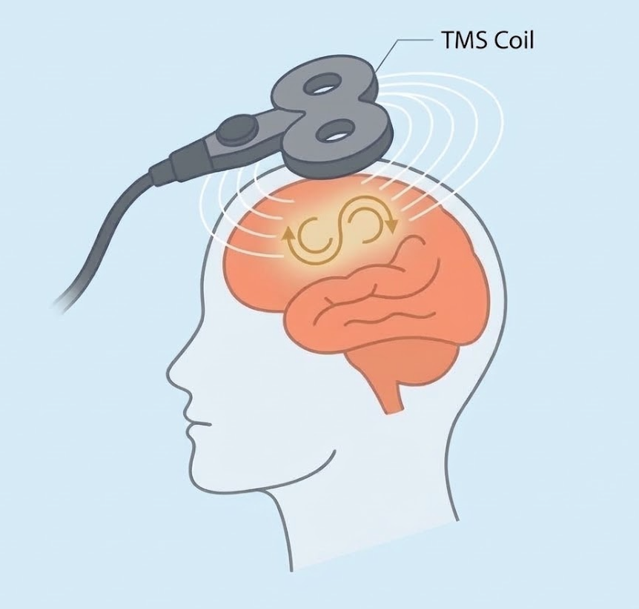
During TMS, a magnet in a figure 8 stimulates areas of the brain affected by depression. This creates increased blood flow and production of beneficial neurotransmitters. It also increases Brain Derived Nerve Growth Factor (BDNF) which allows for new connections to form in the brain, thus increasing neuroplasticity. When the brain has more neuroplasticity, it learns more easily and is able to form new habits more easily.
Why Choose TMS Therapy?
Studies have found that in real-world settings, up to 83% of patients show improvement in depressive symptoms, and more than half may achieve full remission of symptoms.
TMS Therapy is FDA-approved for treatment resistant depression and OCD. TMS has also shown promise in alleviating symptoms for:
- Anxiety
- Chronic pain
- Substance abuse issues
- PTSD
- Mood and personality disorders
Additional benefits of TMS Therapy include:
- Non-invasive and drug free
- Minimal side effects
- No cognitive impairment
Unlike prescription medications which must be taken daily, once a patient undergoes a round of TMS treatments, if effective, the effects can be long-lasting.
What to Expect
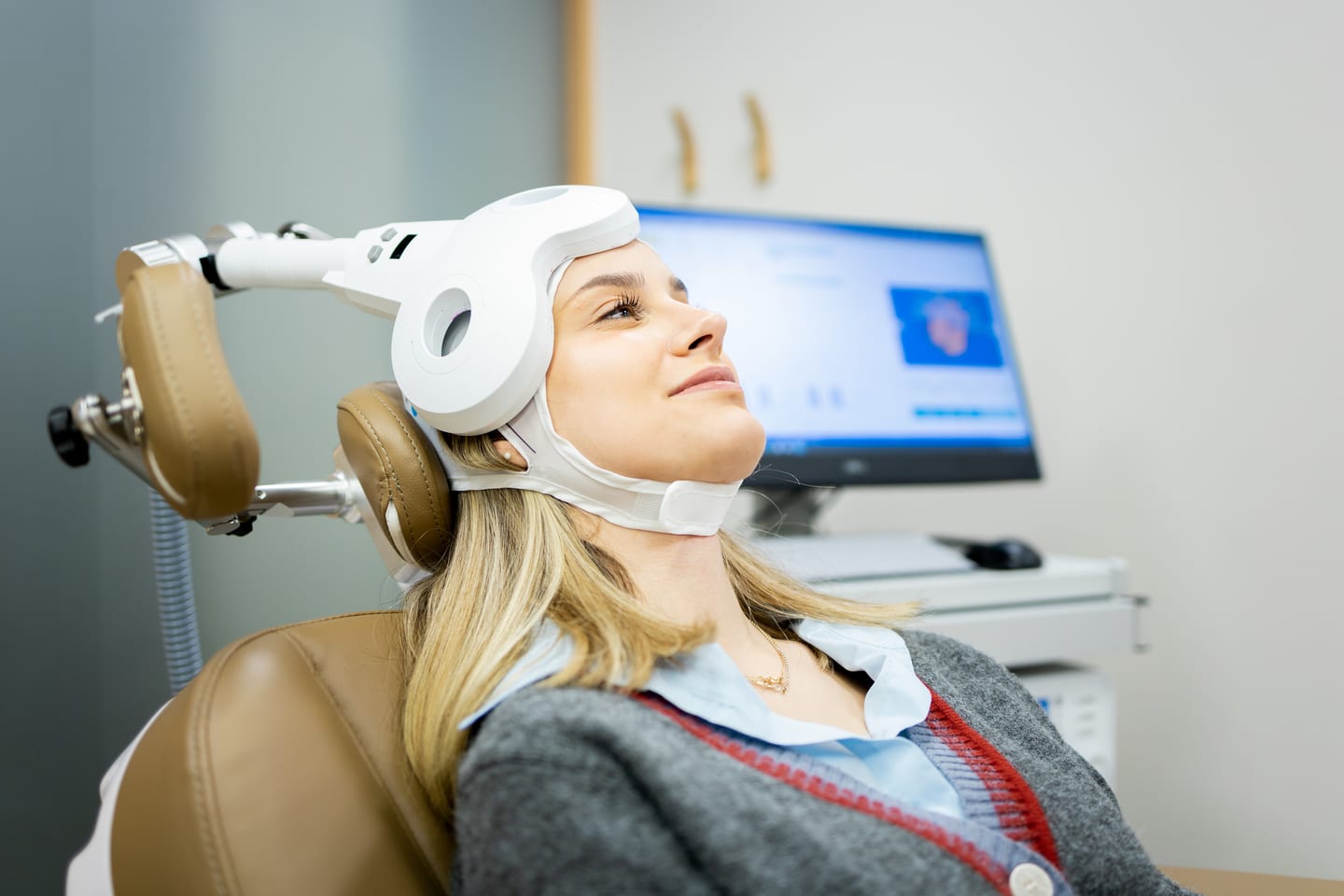
Each treatment course is tailored to an individual’s specific needs and symptoms, so treatment options are flexible. Generally, treatment sessions last 20-50 minutes and take place ~ five days a week for around six weeks.
Most patients report enjoying having time to themselves to step back from the business of life. Because TMS is a non-invasive treatment, there are no needles or drugs administered. Nothing enters your bloodstream during treatment, there’s no need for anesthesia, and you will be fine to drive afterward.
Side effects are minimal and usually limited to headaches initially after treatment. When beginning treatment people can have pain at the site of magnetic stimulation on the scalp. Hearing protection is worn during treatment to protect from the noise which can be loud.
How Will I Know TMS Therapy Worked for Me?
Many TMS patients begin to feel better after a few treatments; some don’t feel better until after they complete the entire course of treatments. Some will feel better for a while, then have a dip in their moods, and return to feeling better after a few more treatments. It’s important to remember that everyone is different.
When patients begin feeling better, they often report enjoying the things they used to, such as hobbies, time with their families, and spending time outside. After TMS, you may find that you’re sleeping better and have more energy. You may see an improvement in your eating habits, be less irritable, in a better mood, be more patient, and have a better sense of humor. Depending on the severity of your initial depression, you may find that you’re taking better care of your personal hygiene.
How to Prepare for TMS Therapy in Flagstaff
Before beginning TMS therapy, you will meet with Dr. Moore as part of an initial psychiatric evaluation to ensure a correct diagnosis and to customize the best treatment plan for you. Your treatment plan will be made with full consideration of your individual emotional, psychiatric, and physical history. Your input, experiences, and preferences for treatment matter. Our only goal is to help improve your quality of life.
Questions People Ask
What is TMS, in plain terms?
A magnetic coil rests against your head and sends gentle pulses to a specific area of the brain. There is no medication, no sedation, and no needles. You are awake and sitting up the whole time and leave when the session ends.
How long does a course of TMS take?
It depends. Typically, there are 20-50 minute sessions on most weekdays for several weeks in a row.
Does TMS hurt?
No. You may feel a minor tapping sensation against the scalp. Some people get a headache or scalp tenderness in the first week, which usually resolves. Major side effects are extremely rare.
Can I drive after a TMS session?
Yes. You can drive yourself to and from every session. People commonly go straight back to work afterwards.
Is TMS FDA approved?
TMS is FDA-cleared to treat major depression in teens and adults who have not improved with antidepressants.
TMS is sometimes used off-label to help treat other conditions.
Who isn’t a candidate for TMS?
TMS is not suitable for people with certain metal medical implants such as metal plates in the head, aneurysm clips, or pacemakers.
This treatment may not be suitable for people with a history of seizures.
Is TMS covered by insurance?
Coverage varies by insurance company and plan, but TMS is often covered for treatment of major depressive disorder.
See our rates here.